
Category: Fire Safety for Restaurants | Read Time: 10 min | By: AMTIDAAD Fire Safety Team, Dubai
Fire hazards in Dubai restaurants are more common — and more dangerous — than most owners realise. Restaurants are among the highest fire-risk environments in any city, and Dubai is no exception. With the UAE’s food and beverage sector growing rapidly across Downtown, JBR, Business Bay, and beyond, restaurant owners face a unique combination of open flames, high-heat cooking equipment, flammable oils, and busy, crowded spaces.
According to Dubai Civil Defence (DCD), commercial kitchens are consistently among the top sources of fire incidents in the emirate. The consequences — for staff, guests, property, and your operating licence — can be devastating.
This guide breaks down the top 10 fire hazards found in Dubai restaurants, explains why each one is dangerous, and gives you practical, DCD-compliant prevention strategies. Whether you run a fine dining establishment in DIFC or a busy cafeteria in a Dubai mall, this applies to you.
Why Fire Safety Matters More in Dubai Restaurants
Dubai’s hospitality sector operates under some of the most stringent fire safety regulations in the region, governed by the UAE Fire and Life Safety Code of Practice and enforced by Dubai Civil Defence. Restaurant owners must maintain valid fire safety compliance certificates, conduct regular equipment inspections, and ensure staff are trained in emergency procedures.
Non-compliance can result in:
- Immediate closure of your restaurant by DCD
- Fines exceeding AED 10,000–50,000 depending on violations
- Voided insurance in the event of a fire-related claim
- Criminal liability if guests or staff are harmed
- Permanent reputational damage in a city built on hospitality
The good news: most restaurant fires are entirely preventable. Here are the top 10 hazards to watch — and how to eliminate them.
1. Grease and Oil Buildup in Commercial Kitchens
Why it’s dangerous: Used cooking oil and grease accumulate on kitchen surfaces, exhaust ducts, filters, and hoods. Grease is highly flammable — when it reaches its auto-ignition temperature, it can burst into flame without a spark. Grease fires spread rapidly and are notoriously difficult to extinguish.
How to prevent it:
- Clean exhaust hoods, filters, and ductwork on a strict schedule — at minimum monthly for high-volume kitchens
- Use grease traps and ensure they are emptied regularly
- Never leave cooking oil unattended on high heat
- Install a wet chemical fire suppression system (Class K) above all commercial cooking equipment — this is a DCD requirement for commercial kitchens in Dubai
- Ensure all kitchen staff know never to use water on a grease fire
AMTIDAAD Tip: Wet chemical suppression systems must be inspected every 6 months under UAE fire safety regulations. AMTIDAAD provides certified inspection and recharge services across Dubai.
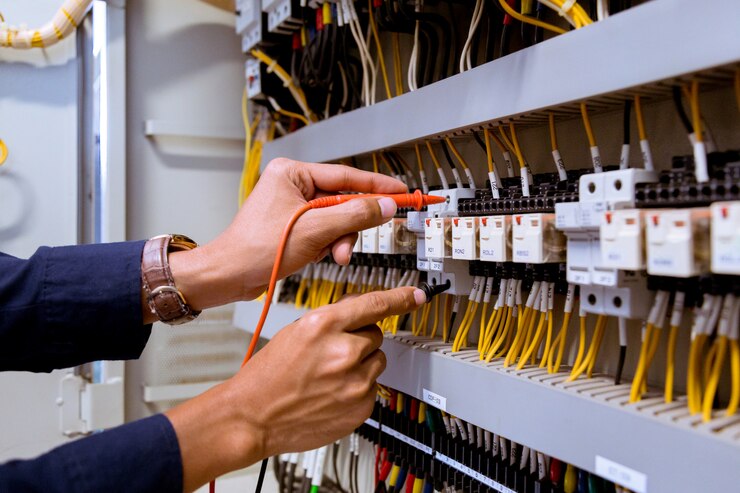
2. Faulty or Overloaded Electrical Wiring
Why it’s dangerous: Restaurants run enormous electrical loads — commercial ovens, refrigeration units, dishwashers, air conditioning, lighting, and POS systems all running simultaneously. Overloaded circuits, worn insulation, and poor connections are a leading cause of kitchen fires in the UAE.
How to prevent it:
- Have your electrical system inspected by a licensed electrician annually
- Never use extension cords as permanent wiring solutions
- Install residual current devices (RCDs) and circuit breakers rated for commercial loads
- Ensure all electrical panels have clear labelling and adequate clearance
- Replace any equipment with frayed cords, discoloured outlets, or flickering performance immediately
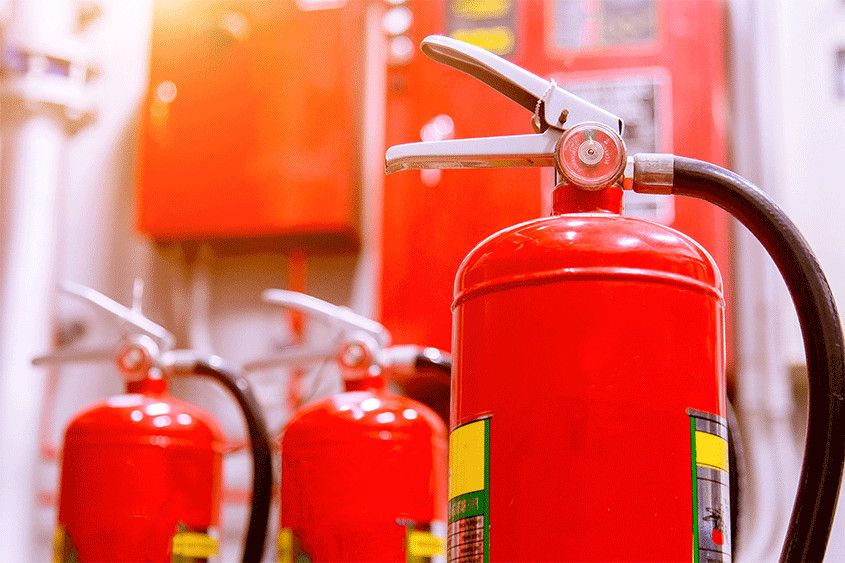
3. Unserviced or Improperly Placed Fire Extinguishers
Why it’s dangerous: Many restaurant fires could be stopped at the source — if the right extinguisher was available, in working condition, and staff knew how to use it. An expired, discharged, or incorrectly typed extinguisher is worse than useless in an emergency.
How to prevent it:
- Install the correct extinguisher types for each zone: Class K (wet chemical) for kitchen cooking areas, CO2 for electrical panels, ABC dry powder for general areas
- Ensure extinguishers are mounted at accessible, clearly marked locations
- Conduct monthly visual checks — confirm the pin is intact, gauge is in the green, and the unit is not damaged
- Schedule professional inspection and certification every 12 months — mandatory under DCD regulations
- Train all kitchen and floor staff in PASS technique (Pull, Aim, Squeeze, Sweep)
4. Inadequate or Poorly Maintained Exhaust Ventilation
Why it’s dangerous: Commercial kitchen exhaust systems serve a dual fire safety purpose: they remove heat, smoke, and grease-laden air from cooking areas, and they contain fires within the ductwork if one occurs. Blocked, dirty, or improperly installed exhaust systems fail at both.
How to prevent it:
- Install exhaust hoods with sufficient capture velocity above all cooking equipment
- Clean exhaust filters weekly and schedule full duct cleaning quarterly (or more frequently for high-volume kitchens)
- Ensure ducts are constructed from the correct materials (typically stainless steel) and have appropriate clearance from combustible materials
- Have the full ventilation system inspected by a certified contractor annually
5. LPG and Gas Cylinder Mismanagement
Why it’s dangerous: Many Dubai restaurants — particularly those with outdoor dining, food trucks, or traditional cooking setups — use LPG (liquefied petroleum gas) cylinders. Improper storage, damaged regulators, and poor ventilation around gas equipment create serious explosion and fire risks.
How to prevent it:
- Store LPG cylinders in a dedicated, ventilated outdoor or semi-outdoor area, away from heat sources and emergency exits
- Never store more cylinders than your licensed quantity allows
- Inspect hoses and regulators monthly for cracks, wear, or leaks — use soapy water to test for gas leaks (never a flame)
- Install a gas leak detection system with automatic shut-off valve in the kitchen
- Ensure all gas connections comply with Dubai Municipality and DEWA regulations
6. Deep Fat Fryers Without Thermostatic Controls
Why it’s dangerous: Deep fryers are responsible for a disproportionate number of commercial kitchen fires. Without automatic temperature controls, oil can be overheated past its smoke point and into auto-ignition — triggering a grease fire that can engulf an entire kitchen in seconds.
How to prevent it:
- Use only commercial-grade fryers with built-in thermostatic controls and automatic cut-off
- Never leave fryers operating unattended
- Drain and replace oil regularly — degraded oil has a lower ignition temperature
- Maintain a minimum safe clearance between fryers and other combustible equipment
- Ensure the wet chemical suppression system nozzle directly covers the fryer
7. Improper Storage of Flammable Cleaning Chemicals
Why it’s dangerous: Restaurant cleaning products — degreasers, alcohol-based sanitisers, and industrial cleaners — are often highly flammable. When stored near heat sources, open flames, or electrical equipment, they pose a serious secondary fire risk.
How to prevent it:
- Store all flammable chemicals in a dedicated, ventilated storage area away from cooking zones
- Never store chemicals under sinks adjacent to gas connections or electrical panels
- Use only the volume of chemical needed for each shift — avoid excessive stockpiling in kitchen areas
- Ensure all containers are clearly labelled with hazard warnings
- Maintain a chemical inventory and Safety Data Sheets (SDS) on-site
8. Blocked or Inadequate Emergency Exits
Why it’s dangerous: In a restaurant fire, evacuation speed is critical. Blocked emergency exits, unmarked routes, or exits that open inward can turn a survivable fire into a tragedy. Dubai has seen incidents where exit mismanagement significantly increased harm during fire emergencies.
How to prevent it:
- Ensure all emergency exits are clearly marked with DCD-compliant illuminated signage
- Conduct a monthly check that all exits are unobstructed and fully operational
- Never use emergency exit corridors for storage — even temporarily
- Post evacuation route maps in the kitchen, dining area, and back-of-house
- Conduct fire evacuation drills with all staff at least twice a year
9. Non-Compliant or Expired Fire Alarm Systems
Why it’s dangerous: A fire alarm system that isn’t working correctly provides false security. In a busy, noisy restaurant kitchen, early warning from a functioning smoke or heat detector can be the difference between a contained incident and a full-scale emergency.
How to prevent it:
- Install a DCD-approved fire alarm system with both smoke and heat detectors — heat detectors are mandatory in cooking areas where smoke from cooking could cause false alarms
- Test all detectors monthly by pressing the test button
- Replace batteries in wireless detectors annually
- Have the complete fire alarm system inspected and certified by a licensed contractor every 12 months
- Integrate the alarm with a manual call point (break glass) near all exits
AMTIDAAD Tip: AMTIDAAD supplies, installs, and maintains complete DCD-compliant fire alarm systems for restaurants of all sizes across Dubai. Contact us for a free site survey.
10. Untrained Staff and No Emergency Response Plan
Why it’s dangerous: Even with the best equipment in place, a restaurant fire can escalate catastrophically if staff don’t know how to respond. Panic, incorrect use of extinguishers, failure to evacuate guests, and delayed calls to emergency services all turn manageable incidents into disasters.
How to prevent it:
- Conduct fire safety induction training for every new staff member before they start work
- Run practical fire extinguisher training at least annually
- Appoint a designated Fire Warden for each shift — responsible for evacuation and DCD liaison
- Post the Dubai Civil Defence emergency number (997) and a clear emergency action plan in the kitchen and back-of-house areas
- Conduct unannounced fire drills so staff respond instinctively, not only when they expect a drill
Dubai Civil Defence Requirements for Restaurant Fire Safety
To legally operate a restaurant in Dubai, you must comply with the following minimum requirements set by DCD and enforced through periodic inspections:
| Requirement | Minimum Frequency |
|---|---|
| Wet chemical suppression system inspection | Every 6 months |
| Fire extinguisher inspection & certification | Every 12 months |
| Fire alarm system inspection & certification | Every 12 months |
| Emergency exit signage check | Monthly |
| Staff fire safety training | Annually |
| Fire evacuation drill | Twice per year |
| Full fire safety audit | As required by DCD |
Failure to maintain these records — even if the equipment is functioning — can result in compliance violations during DCD inspections.
How AMTIDAAD Helps Dubai Restaurants Stay Fire Safe and DCD Compliant
AMTIDAAD is a Dubai-based fire safety company providing end-to-end fire protection services for restaurants, cafes, hotels, and food & beverage businesses across the UAE.
Our services for restaurants include:
- ✅ Wet chemical kitchen suppression system installation and inspection
- ✅ Fire alarm system supply, installation, and annual certification
- ✅ Fire extinguisher supply, mounting, inspection, and recharge
- ✅ Emergency exit lighting and signage installation
- ✅ Annual Maintenance Contracts (AMC) — one contract, full compliance
- ✅ DCD documentation and compliance reporting
- ✅ Fire safety staff training programs
With AMTIDAAD as your fire safety partner, you get a single, certified point of contact for every aspect of your restaurant’s fire protection — so you can focus on running your business, not chasing compliance paperwork.
Don’t Wait for a Fire Inspection to Find Out You’re Non-Compliant
Fire safety violations are one of the most common reasons restaurants in Dubai face sudden closure orders. A proactive approach — regular maintenance, trained staff, and documented compliance — costs a fraction of what a DCD fine, insurance dispute, or fire damage claim would cost your business.
Get a free fire safety assessment for your restaurant from AMTIDAAD today.
📞 Call: +971 54 307 2375 📧 Email: info@amtidaad.com 🌐 Website: www.amtidaad.com 📍 Serving: Dubai, Abu Dhabi, Sharjah, and across the UAE
AMTIDAAD Fire Safety — Protecting Dubai’s Restaurants, One System at a Time.